Towards Desirable Governmentalities
Sciences Po, Bordeaux
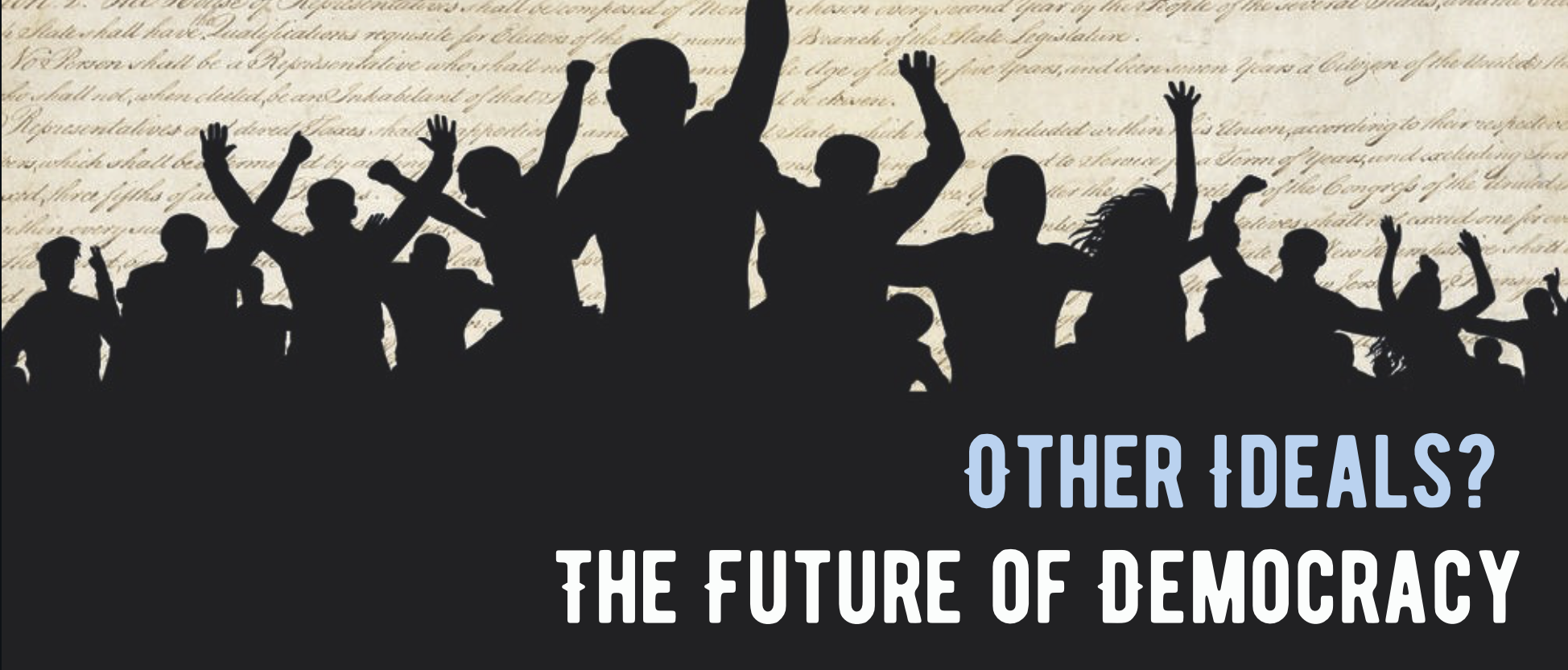
Roundtable: Towards Desirable Governmentalities: Envisioning Democratic Futures Beyond (Neo)Liberal Governmentality
38th Annual SASE Conference: Fighting Divisions: Conflict and Power in a Post Globalisation Order
Society for the Advancement of Socio-Economics
Sciences Po, Bordeaux, France. July 3, 2026
Theme Track
I: Alternatives to Capitalism
Abstract/Description
Despite the prominent association of the notion of governmentality with Foucault’s analysis of neoliberal governmentality, this roundtable does not focus on the analysis or critique of neoliberalism. Instead, it asks whether the concept of governmentality can be used as a positive framework for the development of desirable alternatives. Developing the notion of governmentality into a positive framework for the imagination and construction of democratic futures not only aligns with Foucault’s description of his work as a “tool-box which others can rummage through to find a tool which they can use however they wish in their own area” (Foucault, 1994: 523), but it provides an innovative framework for productively engaging with the crisis of government we are witnessing today. While liberal forms of government were once proclaimed as a self-evident horizon of democratic legitimacy and problem-solving capacity, (neo)liberal governmentality has increasingly lost its hegemonic status, not the least because of the profound limits in its ability to address structural problems like injustice (Fraser, 2022), ecological breakdown (Malm & Carton, 2024), and the erosion of collective political agency (Brown, 2019). Even though it is frequently acknowledged that the neoliberal global order is in decline (Fraser & Sunkara, 2019), the subsequent question of what a desirable alternative governmentality could look like is rarely if ever asked. This is unfortunate, since such work on alternative governmentalities is of the utmost importance in a time in which the cracks in neoliberal hegemony become more and more apparent (Quiggin, 2025; Späth, 2025) and authoritarian forces are eager to exploit this shift.
Bringing together perspectives from governmentality studies, political economy, democratic planning, and cultural theory, this roundtable contributes to closing this gap. It explores how rationales of government can be envisioned that move beyond the dysfunctional paths of (neo)liberal governmentality. The roundtable not only asks “What comes after neo-liberalism?”, but it specifically engages with the question of what desirable alternative governmentalities might look like. The roundtable thus aims to develop a positive notion of governmentality beyond neoliberalism, contributing to broader efforts within the Alternatives to Capitalism network to theorise alternatives to capitalism that embody structurally different rationales of (self-)government.
Participants (alphabetical order)
Mitchell Dean
Mitchell Dean is Professor Emeritus at Copenhagen Business School and a foundational figure in governmentality studies.
Stathis Gourgouris
Stathis Gourgouris is Professor at Columbia University whose work spans political theory, literary studies, and aesthetics, with a focus on democracy, sovereignty, and political imagination. He has explored the proposition of left governmentality in various interventions since 2013.
Jan Groos
Jan Groos is a sociologist and podcaster (Future Histories) whose work explores alternative governmentality, democratic planning, and the role of knowledge and media in socio-ecological transformation. He is Research Lead of the focus area Democratic Change and Knowledge at the Humboldt Institute for Internet and Society (HIIG) in Berlin.
Carys Hughes
Carys Hughes is a Research Fellow at the University of East London, whose work explores participatory governance, communal democracy and left governmentality(s).
Yousaf Nishat-Botero
Yousaf Nishat-Botero is Assistant Professor at University of Birmingham working at the intersections of critical theory, organization studies, and political theory. His work engages with, among other things, democratic planning in the age of planetary crises.